1. Introduction
Hook: Why tyres are your car’s only contact with the road
Problem: Most drivers ignore tread wear
Promise: Learn how tyre tread affects safety, braking, grip, and fuel efficiency
2. What Is Tyre Tread?
Definition
Parts of tyre tread (blocks, grooves, sipes, ribs)
Why tread design matters
3. How Tyre Tread Affects Safety
Grip and traction
Braking distance
Cornering stability
Wet road performance & aquaplaning
Heat management
4. Types of Tyre Tread Patterns
Symmetrical
Asymmetrical
Directional
Comparison table
5. Tyre Tread Depth & Legal Limits
Recommended tread depth
Indian safety standards
How to measure tread depth
6. Warning Signs of Dangerous Tread Wear
7. Real-World Example: Wet Road Braking Comparison
8. Common Mistakes Car Owners Make
9. Pro Tips for Maximum Tyre Safety
10. Frequently Asked Questions (FAQs)
11. Conclusion with Clear Action Steps
How Tyre Tread Affects Safety: What Every Car Owner Must Know
Introduction
Your tyres are the only part of your car that touches the road. Yet, many car owners in India focus more on engine performance than tyre condition.
Here’s the truth: Tyre tread directly affects your safety.
Worn-out tread can increase braking distance, reduce grip, and even cause dangerous skidding during rain. In fact, studies show that bald tyres can increase wet-road braking distance by up to 40% compared to new tyres.
In this guide, you’ll learn exactly how tyre tread affects safety, how to check it, and what you should do to stay protected on Indian roads.
What Is Tyre Tread?
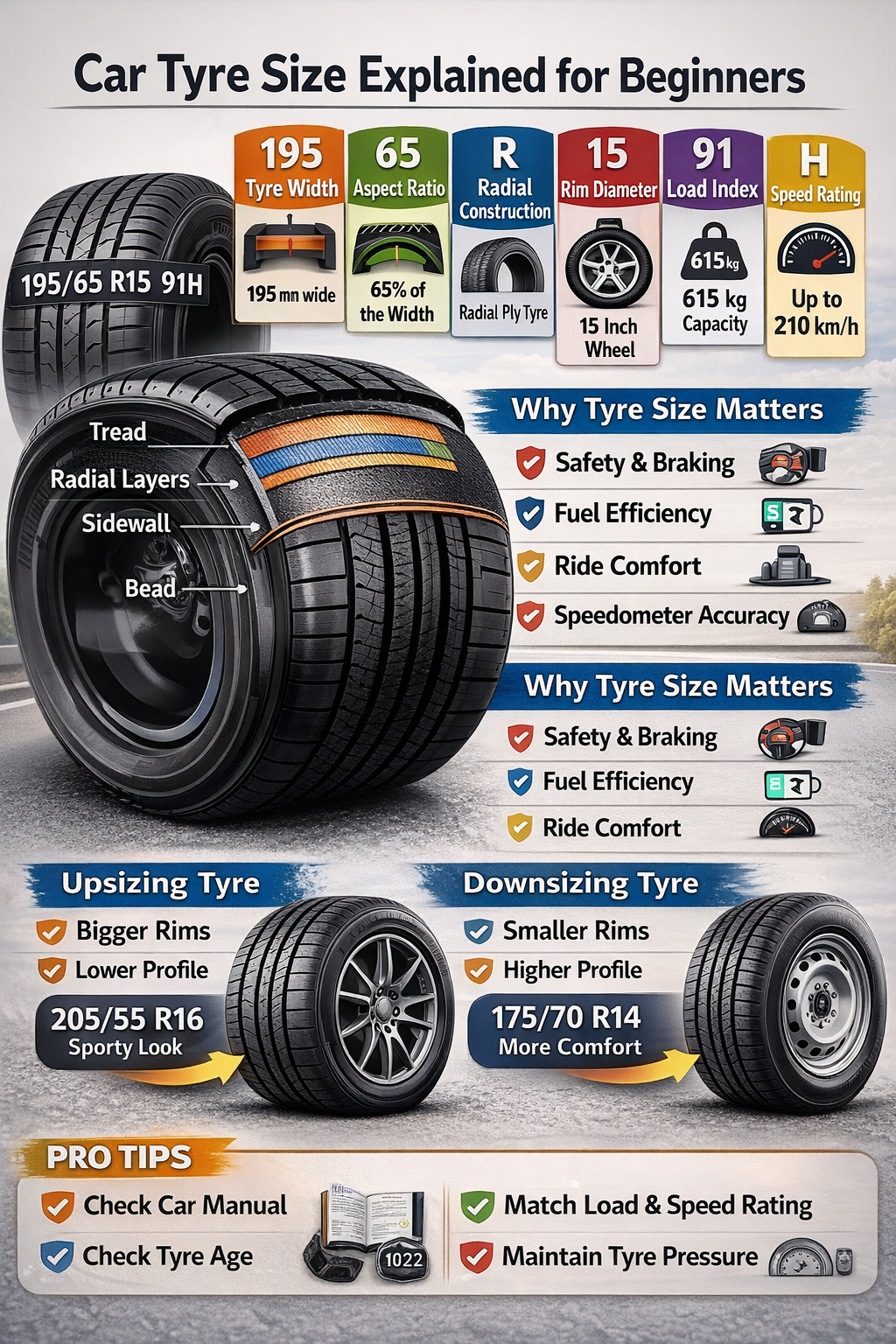
Tyre tread is the pattern of rubber on the outer surface of the tyre that makes contact with the road.
It consists of:
Tread blocks – Provide grip
Grooves – Channel water away
Sipes – Small slits that improve traction
Ribs – Enhance stability
The design of these elements determines how your car performs in:
Dry conditions
Rainy weather
High speeds
Sudden braking
Without proper tread depth, your tyre becomes almost smooth — and that’s when safety risks begin.
How Tyre Tread Affects Safety
1️⃣ Grip and Traction
The deeper and healthier the tread, the better your tyres can grip the road.
On Indian highways and uneven city roads, proper grip helps in:
Smooth acceleration
Stable lane changes
Safe overtaking
When tread wears down, the tyre struggles to “bite” into the road surface.
2️⃣ Braking Distance
This is where tyre tread affects safety the most.
Imagine driving at 80 km/h and suddenly applying brakes.
With new tyres: The car stops faster.
With worn tyres: The car travels several extra meters before stopping.
Even 3–5 extra meters can mean the difference between a near miss and a serious accident.
3️⃣ Wet Road Performance & Aquaplaning
During monsoon season in India, this becomes critical.
Tread grooves are designed to:
Push water away
Maintain road contact
When tread depth reduces, water cannot escape properly. This leads to aquaplaning — where the tyre floats on water and loses control.
At that moment:
Steering becomes ineffective
Brakes don’t respond properly
The car may skid
4️⃣ Cornering Stability
When taking turns at moderate speeds:
Good tread = Strong side grip
Bald tread = Slipping sensation
This is especially risky on:
Flyovers
Curved highways
Hilly areas
5️⃣ Heat Management
Tyre tread helps distribute heat.
Worn tyres:
Overheat faster
Are more prone to blowouts
Reduce overall tyre lifespan
Types of Tyre Tread Patterns
Different tread designs serve different purposes.
1. Symmetrical Tread
Common in small cars
Quiet and long-lasting
Good for city driving
2. Asymmetrical Tread
Better cornering grip
Designed for performance cars
Handles dry and wet conditions well
3. Directional Tread
V-shaped pattern
Excellent for heavy rain
Must be installed in correct direction
Comparison Table
Tread Type
Best For
Wet Grip
Lifespan
Cost
Symmetrical
City driving
Medium
High
Low
Asymmetrical
Performance cars
High
Medium
Medium
Directional
Rainy conditions
Very High
Medium
Medium–High
Tyre Tread Depth & Legal Limits
In India, the minimum legal tread depth is 1.6 mm.
However, safety experts recommend replacing tyres at:
3 mm for better wet grip
Before long highway trips
How to Measure Tread Depth
Use a tread depth gauge
Check tread wear indicators (TWI)
Try the coin test
If the tread looks almost flat, it’s time to replace it.
Real-World Example: Wet Road Braking
At 80 km/h on a wet road:
New tyre (8 mm tread): Stops in approx. 30–35 meters
Worn tyre (2 mm tread): May take 45–50 meters
That extra distance could mean hitting another vehicle at high speed.
Common Mistakes Car Owners Make
Ignoring tread wear until tyre bursts
Replacing only one tyre instead of a pair
Buying cheapest tyres without checking tread pattern
Not rotating tyres regularly
Over-inflating or under-inflating tyres
These mistakes reduce safety and increase long-term costs.
Pro Tips for Maximum Tyre Safety
✔ Check tyre tread every month
✔ Rotate tyres every 8,000–10,000 km
✔ Maintain correct tyre pressure
✔ Replace tyres before monsoon season
✔ Avoid sudden acceleration and harsh braking
If you drive frequently on highways, inspect tread more often.
Frequently Asked Questions (FAQ)
1. How does tyre tread affect braking?
Tyre tread improves grip, reducing braking distance, especially on wet roads.
2. What is the minimum safe tread depth?
Legally 1.6 mm, but 3 mm is safer for wet conditions.
3. Can worn tyres cause accidents?
Yes. Worn tyres increase skidding, aquaplaning, and stopping distance.
4. How often should I check tyre tread?
At least once a month and before long trips.
5. Is uneven tread wear dangerous?
Yes. It affects balance, steering control, and braking efficiency.
Conclusion: Don’t Ignore What Keeps You on the Road
Tyre tread is not just a pattern — it is your car’s primary safety system.
If you truly want to improve road safety:
Inspect your tyres today.
Measure the tread depth.
Replace tyres before they become dangerous.
Choose the right tread pattern for your driving style.
Remember, investing in good tyres is not an expense — it’s protection for your life and your family.
Drive safe. Stay alert. And never underestimate how tyre tread affects safety.